
Checking Criminal History in Iron County
No single screen holds every Iron County criminal record. Begin by asking what happened and where. Fifth District Court holds felony and class A misdemeanor files. Iron County Justice Court holds many class B and C misdemeanors, infractions, and county traffic matters. A city police report stays with that city even when the person was booked into the county jail. Recent custody belongs in the sheriff roster, while a personal fingerprint history comes from Utah BCI.
The official Iron County Sheriff site routes readers to law-enforcement and jail services. Its captured navigation shows why the sheriff is one part of the search, not the full case file.
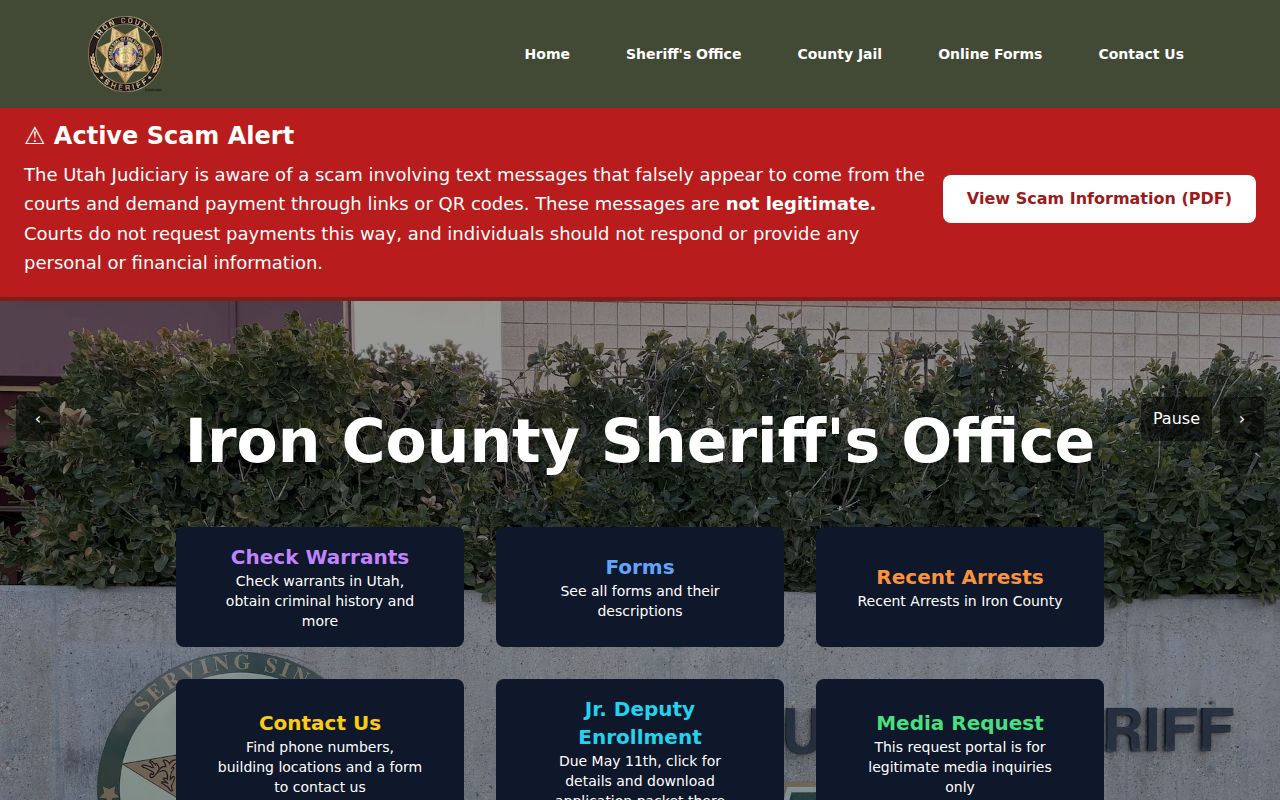
A sheriff record can confirm an incident or booking, but the court clerk remains the source for filed charges and disposition.
- Identify the arresting agency and the likely court from the incident location and charge level.
- Search XChange statewide, then narrow the result to Iron County or the named court.
- Compare the name, case number, filing date, charge, and disposition before accepting a match.
- Check the Iron County jail roster separately when custody is recent or a case has not been filed.
- Ask the filing clerk for older records, the signed judgment, or a certified copy.
- Order a personal Right of Access record from BCI when a fingerprint-linked Utah history is needed.
Note: A booking allegation, a filed charge, and a conviction are three different events and may have different wording.
Searching Iron County Criminal Cases
XChange: Public Case Search is Utah's remote subscription service for public district and justice court summaries. The court system sends entries from CORIS to XChange as clerks enter them. Remote access has a cost, but public terminals at most district courthouses provide a free in-person route. Older justice-court conversions can be thin, and private, sealed, expunged, juvenile delinquency, and child-welfare matters do not appear.
The official XChange overview describes the statewide court-record channel.
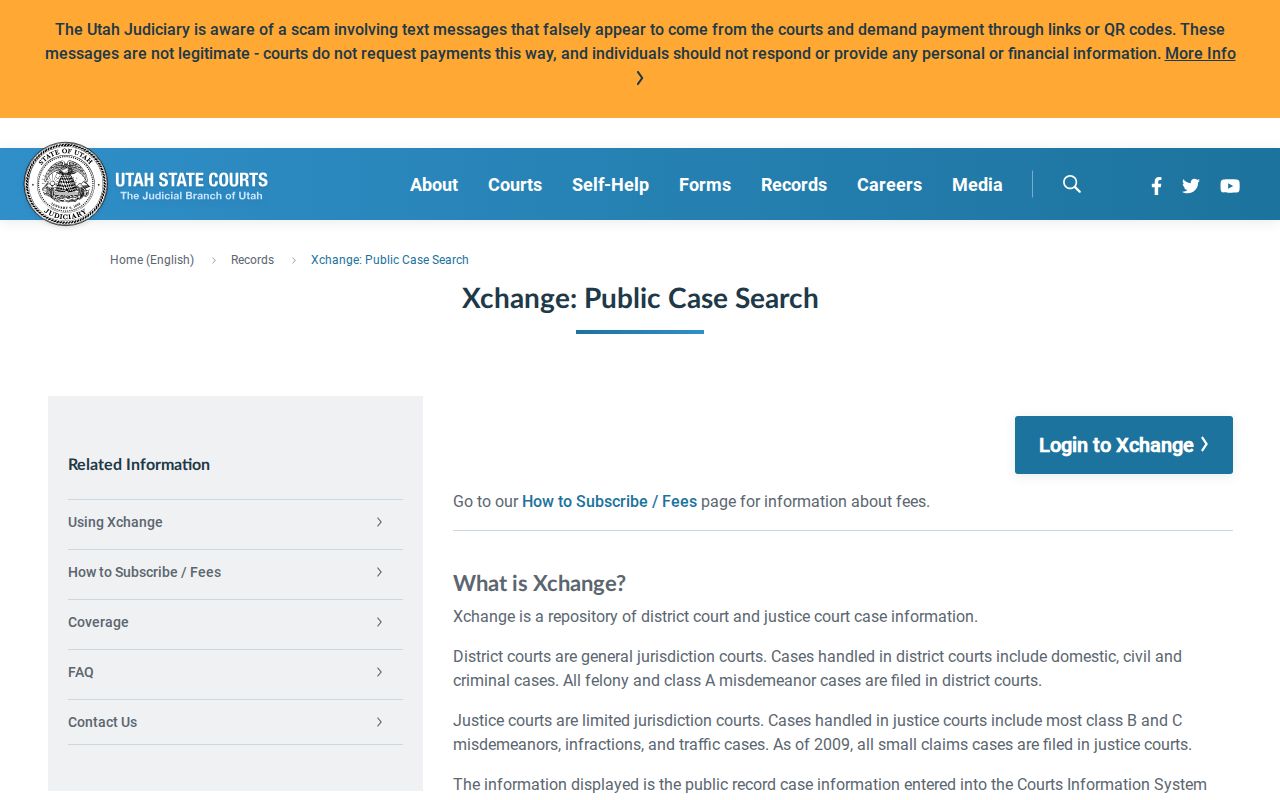
The statewide scope matters because a city or court-only filter can miss a valid Iron County name match.
The court's XChange search help also documents the controls used to narrow results.
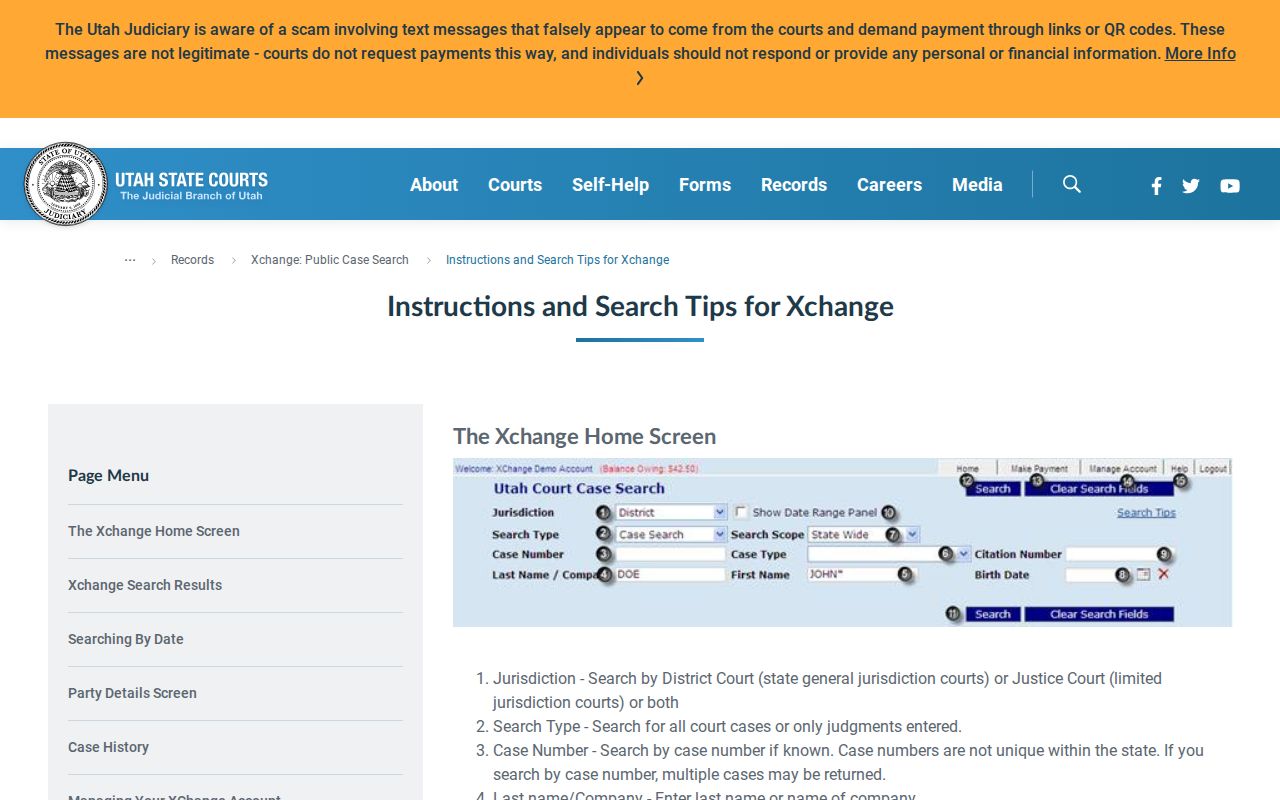
Use several identifiers when a name is common, then verify the actual order with the clerk.
| Field | Use in an Iron County search | Required |
|---|---|---|
| Jurisdiction | District Court, Justice Court, or both | Yes |
| Scope | Statewide, Iron County, or a particular court | Yes |
| Name | Full legal name plus known prior spellings | Conditional |
| Case number | Best exact key when it is known | Conditional |
| Date range | Limits broad results without proving identity | No |
Utah Official Background Checks
The Utah Department of Public Safety, Bureau of Criminal Identification is the central criminal-history repository. Utah does not offer an unrestricted public name search through BCI. A person can request their own Utah record through Right of Access with fingerprints, valid government photo identification, a signed application, and a $20 fee effective July 1, 2025. BCI-approved agencies may capture prints, but appointment and local service costs should be confirmed before travel.
A county court search is not a BCI-certified history. XChange centers on public case entries. BCI groups fingerprint-linked arrest cycles and reported outcomes from across Utah. For a nationwide personal review, the FBI Identity History Summary uses fingerprints and an $18 federal fee. These channels are for official self-review and correction, not an open lookup of another person's private repository record.
| Channel | Scope | Core cost |
|---|---|---|
| BCI Right of Access | The subject's Utah fingerprint history | $20 |
| BCI challenge | Correction of a disputed Utah entry | $20 |
| FBI Identity History Summary | The subject's national fingerprint history | $18 plus print cost |
| XChange | Public Utah court summaries | Subscription, with terminal alternative |
Iron County BCI Self-Review
The BCI Criminal Records page is the official starting point for Right of Access, a challenge, or a subject-authorized third-party release.
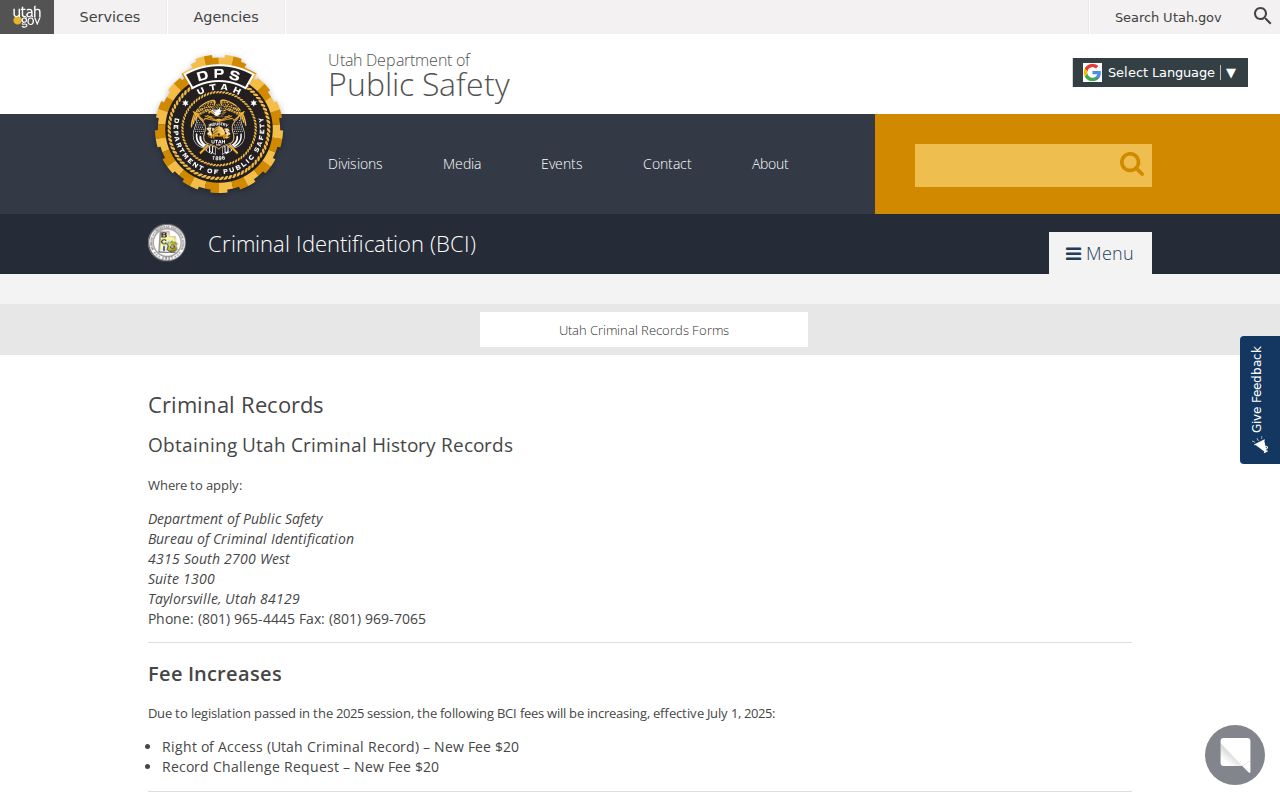
The screen separates personal access from the public court search, which prevents a common mix-up about what Utah makes available by name.
BCI warns that an event may be missing if fingerprints were never submitted, even when a court or correctional record still exists. A challenge packet should identify the disputed arrest cycle or disposition and include certified court proof when that helps resolve the error. Correction is not expungement. A challenge fixes an inaccurate entry, while expungement restricts access to an accurate record that qualifies under Utah law.
The FBI's Electronic Departmental Order process offers a subject-only national identity history. That record can reveal fingerprint submissions beyond Utah, but any error still must be challenged through the agency that contributed it.
Criminal Record Types
Iron County criminal records describe different points in one justice process. An officer's report covers the event and initial allegations. Corrections creates the booking record. A prosecutor chooses what to file. The court docket then records hearings, orders, a plea or trial, disposition, and sentence. BCI may join the fingerprint arrest cycle with a later outcome, while UDC keeps state custody and adult supervision data.
- Incident or arrest report: request it from the sheriff, city police, UHP, or other agency that wrote it.
- Booking record: Iron County corrections records intake charges, custody, and bond details.
- Court case: the filing clerk holds the charge, docket, judgment, and sentence.
- BCI history: a fingerprint-linked Utah compilation available to its subject.
- Corrections record: UDC covers state incarceration and current adult probation or parole.
- Registry listing: the Utah notification registry publishes the fields allowed by current law.
Four Iron County Arrest Records
One arrest can produce four files without any one being wrong. The arresting agency writes its report from the initial event. Iron County corrections records the booking and holds. Fingerprints may create a BCI arrest cycle. If a prosecutor files a case, the clerk records a new court matter. Each custodian updates its own product on its own schedule.
The Iron County jail page identifies the local custody-services route.
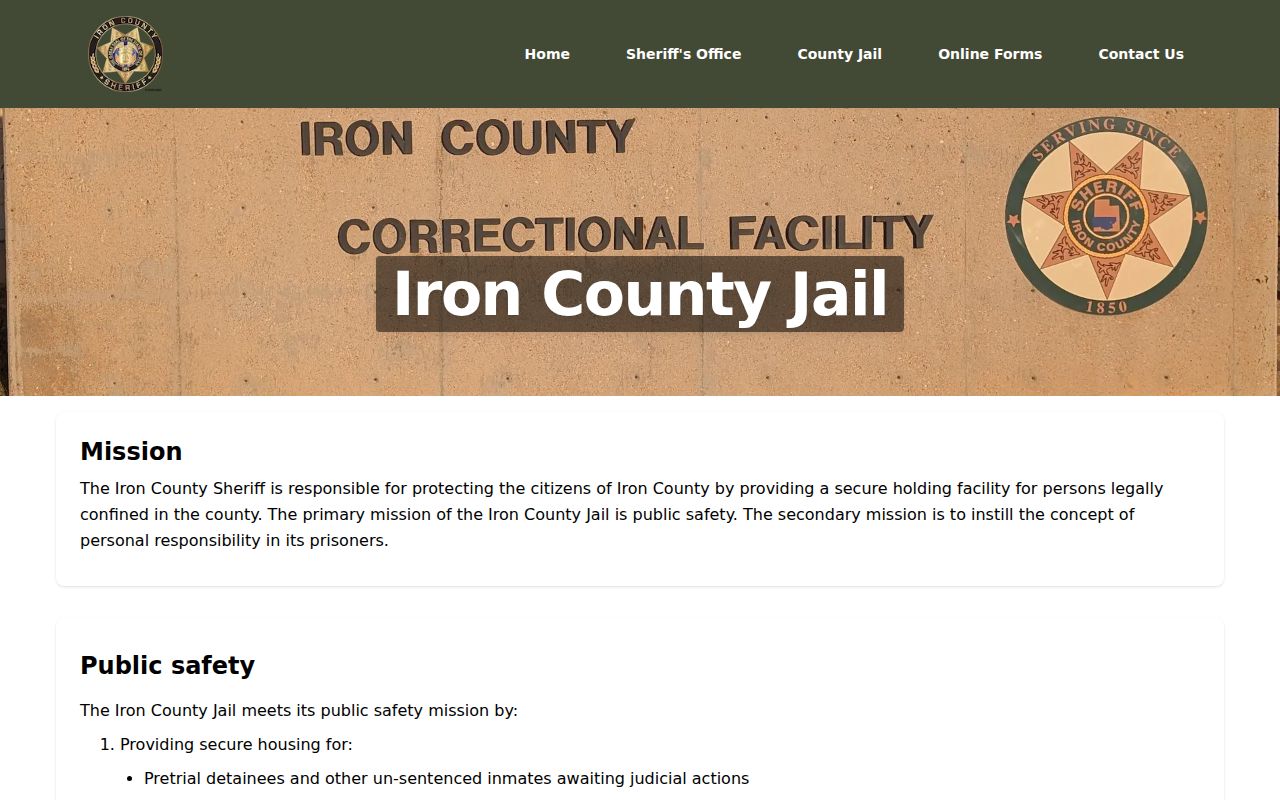
The jail source answers who is held locally, while filed charges and the outcome remain court questions.
Record flow: agency report → Iron County booking → prosecutor review → court filing and disposition → BCI update.
- Booking charge
- The allegation recorded at jail intake, which can change after prosecutor review.
- Disposition
- The outcome of a charge or case, such as dismissal, acquittal, or conviction.
- Docket
- The dated list of filings, hearings, and orders in the court file.
- Plea in abeyance
- A plea held without judgment while conditions are completed; it is not hidden automatically.
Inside an Iron County Criminal Record
A Utah rap sheet emphasizes identity and arrest cycles. A public court summary emphasizes the case, charge, and judicial result. A jail row emphasizes current intake and custody. Read the label on each field before comparing systems, since similar words may describe different stages.
| Name and identifiers | Current and prior names, birth information, physical descriptors, and state or FBI identifiers where maintained and releasable. |
|---|---|
| Arrest data | Arrest date, contributing agency, tracking number, and initial allegations. |
| Court charges | The complaint, information, or indictment and later amendments filed with the court. |
| Disposition | The result for each charge, not merely a broad open or closed status. |
| Sentence | Custody, probation, fines, restitution, or other terms ordered by a judge. |
| Supervision | UDC incarceration, probation, or parole status when it is current and public. |
Use the case number and dates to reconcile records. A charge line alone does not prove conviction, and a closed status does not state why the case closed.
Iron County Custody Search Gaps
The county jail and Utah Department of Corrections cover different people. Iron County's current-inmate and recent-booking tools address local custody. The UDC Offender Search covers people incarcerated by the state or currently supervised by adult probation and parole. UDC specifically excludes a person who is only awaiting trial or sentence in county jail.
The official UDC locator illustrates the state-level search that follows a prison sentence or supervision placement.
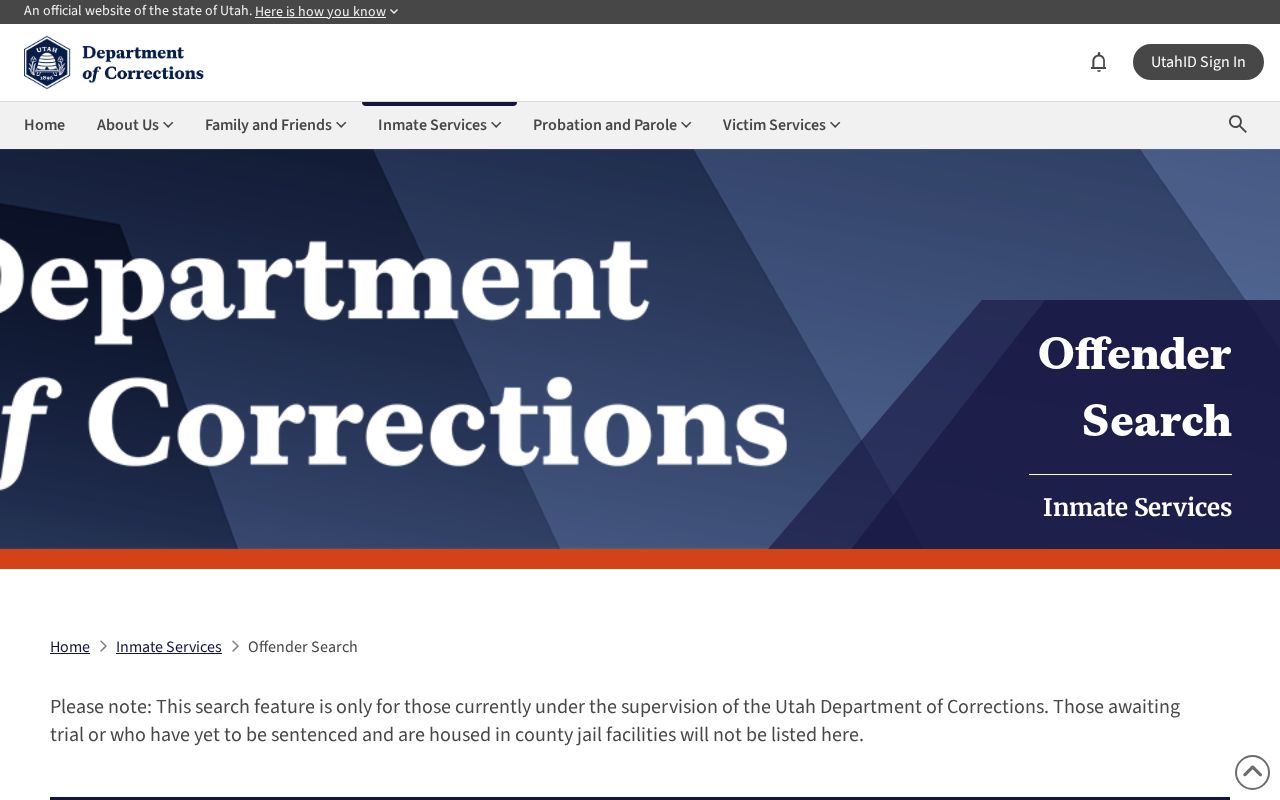
A missing UDC result should send a recent-arrest searcher back to the Iron County jail, not support a claim that no custody event exists.
Adult probation and parole for Iron County is state-run through UDC Region 5 in Cedar City. Parole decisions come from the Utah Board of Pardons and Parole. Board hearing and decision resources supplement the sentencing court file; they do not replace it.
Public Access Laws in Utah
Access depends on the record holder. Executive agencies answer requests under the Government Records Access and Management Act. Court files follow Utah's judicial classification rules. BCI dissemination has its own statute. Registry publication and misuse are governed by the registration code. A public agency can still redact victim data, juvenile information, personal identifiers, or active investigative details.
Key Utah authorities:
GRAMA, Utah Code Title 63G, Chapter 2 sets request, classification, fee, response, and appeal rules.
Utah court rule 4-202.02 classifies judicial records as public, private, protected, sealed, or otherwise restricted.
Utah Code §53-10-108 controls BCI collection and release of criminal-history information.
Utah's Expungement Act defines the eligibility, order, and effect process.
Utah's registration law governs qualifying registry information and lawful use.
The BCI dissemination statute shows why a repository history is not the same product as a public court docket. Requesters should use the custodian and law that match the exact record they want.
Iron County GRAMA Record Requests
A written GRAMA request is the main fallback when an Iron County record is not posted. Send it to the agency that created or keeps the item. For a sheriff report, booking material, jail log, dispatch entry, or body-camera recording, identify the event date, location, involved agency, report number if known, and the exact item requested. Ask for electronic delivery and a cost estimate before staff begins chargeable work.
The Iron County government directory helps distinguish county offices from the court and sheriff channels. That separation matters because the administrative County Clerk is not the custodian of a Cedar City felony file. GRAMA supplies the request and fee framework, and a denial should identify the classification and appeal route. Personal urgency alone does not establish expedited public-benefit treatment.
| Record sought | First custodian | Fallback |
|---|---|---|
| Sheriff incident or booking | Iron County Sheriff GRAMA channel | Records counter, mail, or phone |
| City police report | Creating city police department | City GRAMA form or counter |
| Filed charge and judgment | Filing court clerk | XChange or courthouse terminal |
| Personal statewide history | Utah BCI | Approved Right of Access agency |
Sealed, Expunged, and Restricted Records
Juvenile delinquency matters, protected victim or minor information, personal identifiers, sealed files, and expunged cases do not receive ordinary public treatment. XChange suppresses sealed, expunged, juvenile delinquency, and child-welfare matters. Investigative records also may be held back while the law supports a protected classification.
Utah defines expungement as sealing or otherwise restricting access. A BCI eligibility certificate does not clear a record by itself. In a petition case, the person files in the court of judgment, completes the prosecutor and court process, obtains a signed order, then makes sure BCI and affected agencies receive it. Keep a certified copy of the order because downstream updates can take time.
Note: A dismissal does not erase the related booking automatically; qualifying records require the applicable expungement or Clean Slate process.
Iron County Expungement Filing
Start by reviewing each case and the BCI history. Utah BCI considers the total record, including other states, prior expungements, and events that may not have reached its repository. The application for a certificate of eligibility costs $65. BCI reports a one-to-two-month processing range and does not expedite. Eligible conviction, plea-in-abeyance, and special certificates cost another $65 each, while dismissal, acquittal, and declination certificates have no added certificate fee.
The BCI expungement page carries the current eligibility and processing directions.
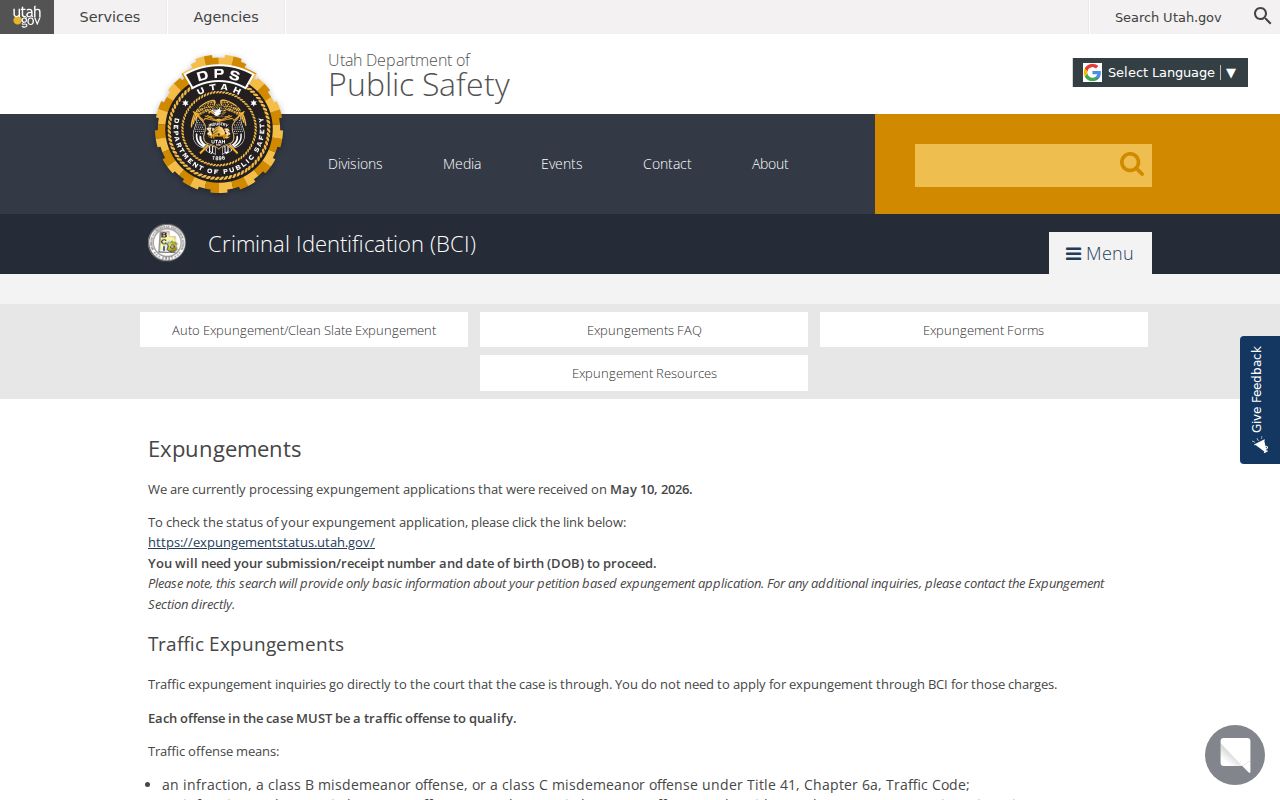
Applicants should verify current rules there before relying on an older form or Clean Slate notice.
The Utah Clean Slate page explains the narrower automatic process and current implementation notices.
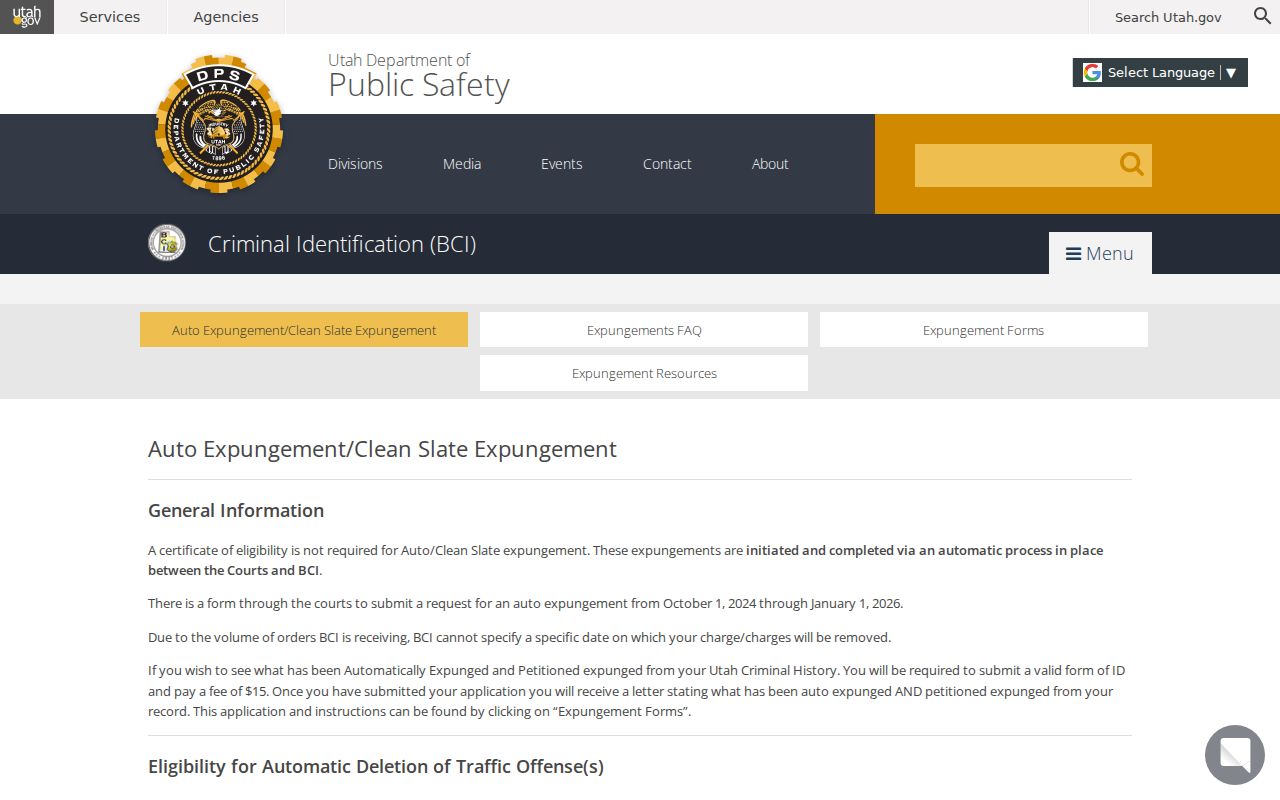
Automatic relief and petition relief are not interchangeable. For an Iron County Justice Court matter, use the local packet and file at 82 N 100 E, Suite 101. Fifth District matters go to the district clerk.
Iron County Warrant Record Checks
No verified comprehensive public Iron County active-warrant database was found in the official sources. Check XChange or the filing clerk first, then confirm status directly with the issuing court or sheriff. Iron County Justice Court instructs callers to use 435-865-5335 for a warrant question. Merely asking for a new court date does not recall an active bench warrant.
The current Iron County Justice Court instructions provide the local case and warrant route. Use the case number and identity details when calling, and confirm whether another hold exists before relying on a single status.
- Verify the warrant with the issuing court or sheriff.
- Obtain the current order, bond terms, and information about other holds.
- Address the underlying appearance, compliance issue, or surrender instruction.
- After recall or resolution, allow processing time and confirm again with the clerk.
Two Iron County Courthouse Addresses
Parowan is the county seat, but most criminal-record foot traffic is in Cedar City. The historic county government building at 68 S 100 E in Parowan houses administrative offices. It is not the default counter for a Cedar City felony. Fifth District Court at 40 N 100 E holds Iron County felony and class A misdemeanor files. Iron County Justice Court at 82 N 100 E, Suite 101, handles many lower-level county matters.
The Fifth District locations page confirms the district sites serving Iron County.
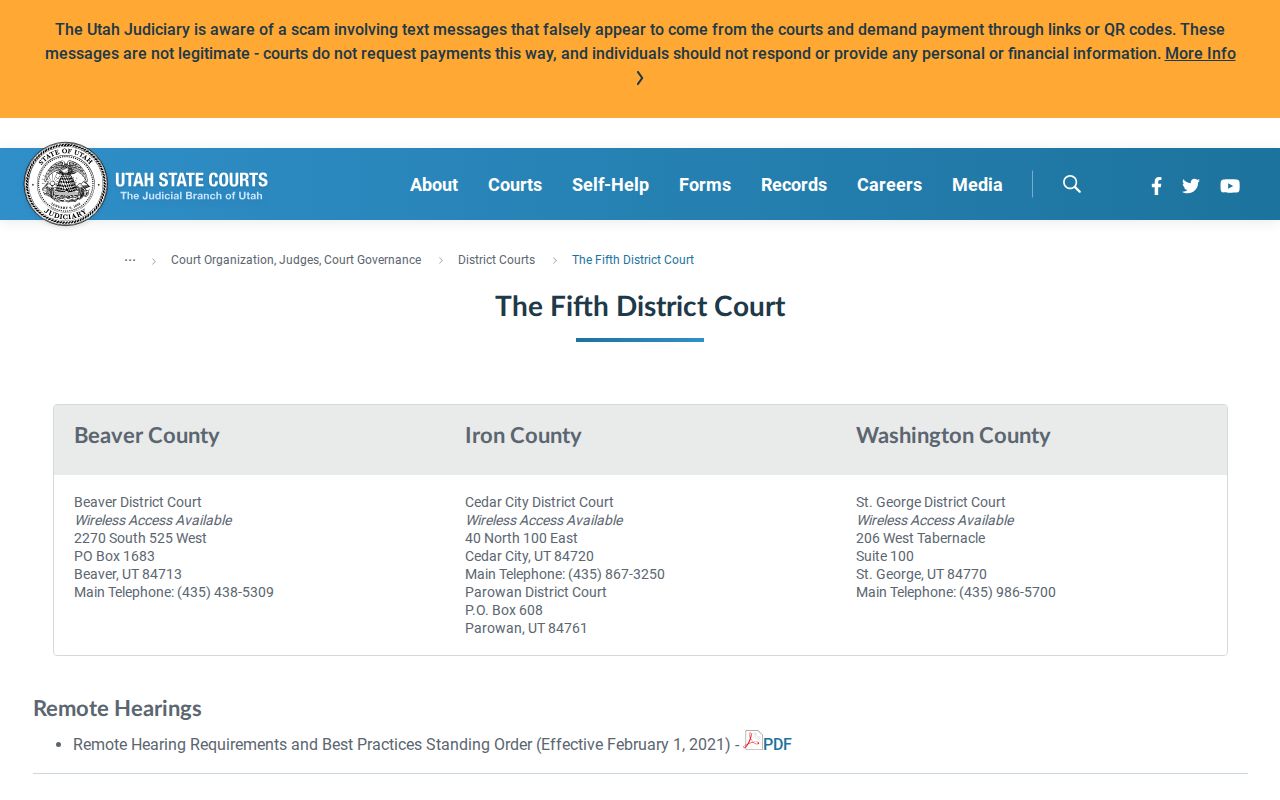
Call 435-867-3250 before a district-court trip to confirm counter access and the availability of the requested file.
Fifth District Court
40 N 100 E
Cedar City, UT 84720
435-867-3250
Iron County Justice Court
82 N 100 E, Suite 101
Cedar City, UT 84720
435-865-5335
County Administration
68 S 100 E
Parowan, UT 84761
435-477-8340
Iron County Criminal Justice Context
Iron County spans 3,296.34 square miles and had 17.4 residents per square mile in the 2020 Census. The July 2025 estimate was 67,141 people, up 17.2 percent from the 2020 estimate base. That growth across a large area helps explain why records are split among Cedar City courts, Parowan administration, city police departments, the sheriff, UHP, SUU Police, and state public-land officers.
Census QuickFacts supplies the population and geography context. Those figures do not measure crime, but they help explain the county's expanding records footprint and the need to identify the correct agency.
The existing jail was built in 1987 with a stated 180-bed capacity. County materials describe crowding and a proposed 672-bed sheriff complex, but those proposal facts do not prove construction was completed. A 2024 jail snapshot counted 179 people across county, state, federal, and outside-county holds. It was a single snapshot, not an annual average.
County materials document the facility history and proposal. Call the jail at 435-867-7555 before visiting because official pages list more than one public-safety address.
Iron County Criminal Records by City
City police departments keep the reports they create even when an arrest later moves into Iron County jail or a state court. Cedar City is the main police and court hub. Enoch uses its own police records channel while lower-level cases route through Iron County Justice Court. Parowan remains the county seat, but its justice court closed in 2025 and existing cases transferred to Iron County Justice Court.
Cedar City Criminal Records
40,885 residents in Vintage 2024. City police records, county jail bookings, and two Cedar City court levels may all matter.
Enoch Criminal Records
8,664 residents in Vintage 2024. Start with Enoch Police, then follow detention and filed cases into county channels.
Parowan Criminal Records
3,283 residents in Vintage 2024. Police reports remain local while transferred court cases now route to Iron County Justice Court.